Bedding Guide · Down Comforters
Fill Power vs. Fill Weight: Understanding Down Comforter Warmth
Two numbers can describe the same comforter and tell different stories. Fill power measures the loft of down; fill weight tells you how much of it is inside. To understand warmth, neither number can stand alone. Construction, shell fabric, room temperature and the way you sleep all shape the experience.
Published October 19, 2026
A down comforter can look cloudlike on a bed yet feel surprisingly light when lifted. Another may have a lower, more compact profile but carry more total fill. The difference is not a contradiction. It is the distinction between fill power and fill weight—two measurements that describe separate qualities of the insulation inside.
Fill power is a measure of loft: how much space a given amount of down occupies under standardized conditions. Fill weight is the total mass of the filling used in the comforter. One helps explain how efficiently the down can trap air; the other helps indicate how much insulating material is present overall. Together, they offer useful clues about a comforter’s warmth and feel, but they do not produce a simple score in which the larger number always wins.
That distinction matters in North Dakota, where winter bedrooms may be kept warm and steady, allowed to cool overnight, or exposed to sharp differences between indoor and outdoor temperatures. It matters elsewhere, too. A comfortable bed depends not just on the weather outside but on the room, the sleeper and the layers already in use.
Fill power: loft, measured
Down is the soft, three-dimensional cluster found beneath the outer feathers of waterfowl. Its structure creates small pockets that hold still air. Those pockets slow the movement of heat, helping the body stay warm. When the clusters have more volume for their weight, they can form a loftier insulating layer without requiring as much material.
Fill power describes that volume. It is commonly expressed as a number such as 600, 700 or 800. In general terms, a higher fill-power down occupies more space per unit of weight. The practical appeal is efficiency: a comforter can achieve substantial loft with comparatively less fill, which may make it feel light and airy rather than dense.
But loft is not a thermostat setting. An 800-fill-power comforter is not automatically warmer than every 600-fill-power comforter. The higher number describes the down’s capacity to loft under test conditions, not the finished comforter’s total insulation in every bedroom. How much down is used, how it is distributed, and how the comforter is built all influence the result.
Fill power also does not tell you whether a comforter will suit your preferences. Some sleepers enjoy a lofty, enveloping bed; others prefer a flatter covering with less visual and physical bulk. A high-loft comforter may feel especially light for its warmth, but the overall impression depends on its dimensions, construction and filling quantity.
Fill weight: the amount inside
Fill weight is the total weight of the down or down blend inside the comforter, usually stated in ounces or grams. It is not the comforter’s complete weight: the cotton shell, stitching and other components add weight too. Rather, it tells you how much insulating fill was used in a particular size and model.
More fill can mean more insulation, particularly when comparing comforters of similar size, design and fill power. Yet the comparison becomes less clear when those conditions differ. A king comforter naturally requires more material than a twin. A comforter with a larger surface area may have a greater fill weight without being warmer per square inch. A different baffle design can change how the same quantity of down spreads across the bed.
Fill weight is therefore most useful when it is read alongside size and construction. If a label provides the fill weight but not the dimensions, the number is incomplete. If it gives the dimensions but no details on fill power or construction, the reader still lacks a meaningful basis for comparison.
Think of the two figures as answering different questions. Fill power asks, “How much loft can this down create for its weight?” Fill weight asks, “How much filling has been put into this comforter?” Neither question, by itself, answers the most personal one: “Will I be comfortable under it?”
Why the numbers work together
Consider two hypothetical comforters of the same size. One uses higher-fill-power down but a relatively small amount. The other uses lower-fill-power down in a greater quantity. The first may feel loftier and lighter; the second may have a denser, more substantial hand. Depending on the amount and distribution of filling, either could provide suitable warmth. Their labels do not settle the question without further context.
This is why a comparison based only on the highest fill-power figure can mislead. High fill power indicates loft potential, not a guaranteed warmth level. A lighter fill weight does not necessarily mean a comforter is inadequate, especially if the down is highly efficient and the bedroom is comfortably heated. Conversely, a large fill weight is not a promise of ideal comfort if the sleeper tends to overheat or the room is already warm.
Manufacturers may use different dimensions, chamber layouts, shell fabrics and warmth categories. A “lightweight” option from one range cannot be assumed to match a “lightweight” option from another in a direct, standardized way. When information is available, compare like with like: the same bed size, similar design, stated fill power, total fill weight and intended warmth level.
The goal is not to crown a winning number. It is to read a set of clues. Fill power speaks to the character of the insulation; fill weight speaks to its quantity; construction explains how it is arranged; and the sleeping environment determines how that arrangement performs in daily life.
Construction can change the experience
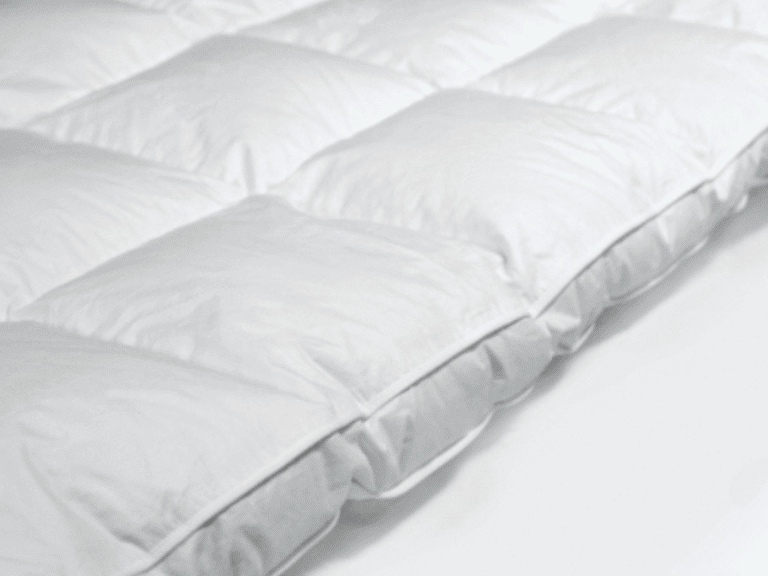
Down needs space to loft, but it also needs boundaries to stay evenly distributed. Comforters use sewn-through compartments, baffles or other chamber designs to manage the fill. These choices affect the way warmth is spread across the surface and how the comforter drapes.
In a sewn-through design, the top and bottom shell fabrics are stitched together at intervals. The seams help keep the filling in place, but they can create thin lines where there is less insulation. This style often supports a flatter profile. Baffle-box construction, by contrast, uses internal fabric walls to create three-dimensional compartments. Those chambers give down room to expand and can help maintain more consistent loft across the comforter.
Neither construction is automatically right for every sleeper. A flatter, more tailored insert may suit someone who wants a lighter-looking bed or values a low-profile layer. A baffle-box design may appeal to someone seeking greater loft and a more even distribution of fill. The precise effect depends on the comforter’s design and materials.
Shell fabric plays a supporting role. A tightly woven cotton shell can help contain the down while allowing the bedding to feel breathable and soft. Fabric weight, weave and finish influence the comforter’s drape and tactile feel. The shell also contributes to total weight, which is one reason the comforter’s overall heft should not be confused with its fill weight.
Stitching, seams and compartments are worth examining as more than decorative details. If filling shifts into one area, another area may feel less insulated. Regular shaking and airing, in accordance with the care instructions, can help a comforter maintain an even appearance, but good construction is central to keeping the filling distributed in the first place.
Warmth is personal—and local
North Dakota’s winters make insulation an obvious consideration, but the state’s climate does not prescribe a single comforter choice. Some homes maintain a steady bedroom temperature throughout the night. Others lower the heat, use room-by-room controls or rely on older buildings that cool unevenly. A sleeper in a well-heated Fargo apartment may have different needs from someone in a draftier rural home, even on the same January night.
Indoor conditions are the useful starting point. Think about the temperature where you sleep, whether it changes overnight, and how often you wake feeling too warm or too cold. Take account of pajamas, sheets, mattress protectors and any blankets already on the bed. A comforter is one part of a small climate system, not a stand-alone solution to every night’s temperature.
Personal comfort varies, too. Some people naturally run warm; others seek extra coverage even in a heated room. Health, age, sleep habits and changes in household routines may also affect how warmth is perceived. A comforter that feels perfect to one person sharing a bed may be too warm—or not warm enough—for another.
Humidity and airflow add nuance. A room with limited air circulation can feel stuffier under heavy layers. Conversely, a bedroom with drafts or inconsistent heating may call for a more insulating setup. The objective is steady comfort, not maximum loft. The best choice is the one that supports a comfortable night without repeated adjustments.
Seasonal layering offers flexibility
A comforter does not have to serve every month in exactly the same way. Layering gives sleepers a practical way to adjust as indoor conditions shift. A lighter insert can work through warmer periods and be paired with a blanket when temperatures fall. In a colder room, a warmer comforter may be more suitable, or an additional layer may provide targeted coverage without requiring a change to the entire bedding setup.
Layering has an advantage over treating one high fill-power number as a year-round answer: it responds to actual conditions. North Dakota’s heating season can be long, but indoor warmth is often controlled independently of outdoor weather. A room kept at a consistent temperature may need less insulation than its winter landscape suggests. A cooler bedroom, on the other hand, may call for more.
Look for comforter descriptions that specify a range of warmth options, such as summer weight, lightweight or midweight. These terms can help organize a decision, but they are not universal measures. Use them alongside the manufacturer’s explanation of the product, the fill details and your own experience with the room.
When adding layers, consider whether they stay in place and whether they restrict movement. A stack of bedding that is warm but cumbersome may be less comfortable than a single well-chosen insert. The aim is to add useful insulation while keeping the bed easy to move in and easy to adapt.
A practical way to compare comforters
Before comparing down comforters, start with the sleep environment rather than the product label. These questions can turn a technical specification into a more useful decision:
- What is the bedroom like overnight? Consider its usual temperature, changes in heating and any noticeable drafts.
- How do you sleep? Recall whether you tend to wake warm, cool or comfortable with your current bedding.
- What size is the comforter? Compare fill weight only with products of similar dimensions; larger sizes generally use more fill.
- What are the fill power and fill weight? Read them together. One describes loft potential; the other describes the total amount of fill.
- How is the fill distributed? Look for information about sewn-through or baffle-box construction and how the chambers are arranged.
- What does the shell contribute? Consider fabric, weave and care requirements as part of the feel and maintenance picture.
- Can warmth be adjusted? Seasonal options or simple layering may offer more flexibility than choosing solely for the coldest night of the year.
If important specifications are missing, avoid treating a single advertised number as a complete comparison. Ask for the size-specific fill weight, the construction details and the intended warmth range. A clear description should help explain the comforter as a whole, rather than imply that one impressive figure guarantees a particular result.
Common misunderstandings, corrected
“Higher fill power always means warmer.” Not on its own. Higher fill power indicates more loft per unit of down, but overall warmth also depends on how much fill is used and how the finished comforter is constructed.
“More fill weight always means better.” More fill may increase insulation in a comparable design, but it can also produce a heavier, fuller comforter than a warm sleeper wants. The right amount depends on the room and the person using it.
“The comforter’s total weight tells me the fill weight.” It does not. The shell, seams and other components contribute to the finished product’s weight. Fill weight refers to the insulating material inside.
“One specification lets me predict exactly how warm I will feel.” No label can account for every bedroom, sleep habit or personal preference. Measurements are useful for comparison, not guarantees of an individual experience.
“A lofty comforter must feel heavy.” Not necessarily. A high-loft filling can create visible volume with relatively little weight. That light, airy impression is one reason fill power is valuable—but the finished feel still depends on the entire design.
Care helps preserve loft
Down depends on its structure to create insulating air pockets. Compression, moisture and inappropriate cleaning can affect the way it lofts. Follow the care label rather than relying on a general rule: comforters differ in shell, construction and filling, and their cleaning instructions may not be interchangeable.
Using a duvet cover can help reduce direct exposure to body oils and everyday dust, while routine airing may help bedding feel fresher. When making the bed, a gentle shake can encourage fill to settle more evenly through its compartments. Avoid storing a down comforter compressed for extended periods; a breathable storage bag and adequate space can help it retain its loft between seasons.
Care is not a substitute for suitable specifications, but it supports long-term performance. A comforter chosen for its loft and warmth should be allowed to recover between uses and maintained according to its maker’s directions. If the fill clumps, shifts or loses loft, consult the care guidance before attempting a remedy.
The number is a beginning, not a verdict
Fill power and fill weight are most useful when they are read as a pair. Fill power describes the loft potential of the down; fill weight describes how much filling the comforter contains. Their interaction helps explain why two inserts can look, feel and insulate differently—even when each carries a number that sounds impressive.
Construction determines how that material is arranged. Shell fabric shapes the touch and drape. Room temperature and bedding layers set the conditions in which the comforter must work. And the sleeper, not the specification sheet, delivers the final judgment.
For a North Dakota bedroom, the sensible choice is not automatically the warmest comforter on offer. It is the one that matches the indoor climate, the sleeper’s preferences and the household’s approach to seasonal heating. Compare the complete set of details, favor flexibility where conditions vary, and treat each figure as information—not a promise. Warmth, after all, is not just a number. It is the quiet balance that lets a bed feel right through the night.