Bedding · Bedroom textiles
Coyuchi Pillow Covers and Shams: Linen Texture, Fit, and Care
Linen pillow covers and shams bring an easy, tactile quality to a bed: a little rumple, a little structure, and a surface that changes with use. Choosing well means looking beyond the color and the name on the label. Dimensions, closure, fabric details, and care instructions all shape how a cover fits into everyday life.
Published November 21, 2026
A bed is built from decisions that are small enough to overlook and visible enough to matter. A pillow cover can soften a room’s edges, introduce a new texture, or make a familiar arrangement feel more considered. A sham can frame the bed with a more tailored finish. Linen does both in its own way: it has a natural irregularity that resists looking too polished, and a breathable feel that suits bedrooms in many seasons.
When considering Coyuchi pillow covers and shams, the most useful questions are practical ones. What are the finished dimensions? Is the piece a cover only, or does it include an insert? How does it close? What kind of linen is described, and what care does the maker recommend? Product names and photographs may suggest a certain look, but the specifications tell you whether the textile will work with your pillow, routine, and room.
This guide explains how to read those details, how to think about linen’s texture and fit, and how to care for linen bedding over time. The aim is not to prescribe one perfect arrangement. It is to help you choose pillow covers and shams with clearer expectations—and enjoy them after the bed is made.
First, distinguish a cover from a sham
“Pillow cover” and “sham” can overlap in everyday conversation, but listings may use the words to describe different constructions or intended uses. A pillow cover generally encloses an insert or pillow. A sham is often designed as a decorative outer layer, sometimes with a flange, border, or back closure that creates a more finished appearance. Neither term alone guarantees a particular size, closure, or included insert.
That distinction matters at the point of purchase. A listing may show a plump pillow but sell only the textile cover. Another may bundle a cover and insert, or offer them separately. Before choosing, look for an explicit “included” or “not included” statement. If that information is absent, treat it as unresolved and check with the seller rather than assuming the photograph represents everything in the package.
Also note the stated dimensions. Some measurements refer to the cover when laid flat; others may describe the pillow size it is designed to fit. A decorative cover is often cut slightly smaller than its insert to create a full appearance, but the amount of ease varies. A tight fit can strain seams or make the corners difficult to fill. An oversized insert may distort the closure, while an undersized one can leave the cover slack and collapsed.
Why linen feels different
Linen is made from flax fibers. Compared with a smooth, uniform-looking fabric, it often shows more variation in the yarn and weave. The surface may have subtle slubs—small irregularities that are part of the material’s character, not necessarily flaws. Depending on the fabric and finish, linen can feel crisp at first, soft and supple, or somewhere between the two.
That texture is part of linen’s appeal. It gives a bed visual depth without requiring a loud pattern, and it can make a carefully arranged room feel less formal. A linen pillow cover may look intentionally relaxed even when the rest of the bedding is neat. The fabric’s appearance can also shift in different light: a washed finish often reads as softer and more lived-in, while a denser or more structured weave may look sharper.
Linen is commonly valued for breathability and for its ability to absorb and release moisture. Those qualities can make it pleasant against the skin, though comfort is personal and depends on the fabric, room conditions, and how a pillow is used. A decorative sham that spends most of its time behind sleeping pillows has different demands from a cover used nightly or leaned on while reading.
It is useful to separate broad fiber characteristics from specific product claims. The word “linen” does not, by itself, establish the fabric’s weight, origin, weave, finishing process, or environmental credentials. Read the item’s own details. If a listing specifies fiber composition, fabric weight, finish, or country of manufacture, use that information; if it does not, avoid filling in the gaps with assumptions.
How to choose the right size
Start with the pillow you already own—or the insert you plan to buy. Measure it across its widest points, including its height or depth, and check the product’s stated dimensions against those measurements. A square decorative pillow needs a square cover of a compatible size; a lumbar insert needs a cover with the correct proportions. The words “standard,” “Euro,” or “king” can help, but they should not replace the actual measurements, since sizing conventions can differ across brands and regions.
Think about the look you want as well as the fit. A cover cut close to the insert can produce a full, rounded shape. A more generous cover may create a softer, looser outline. Neither is inherently better. The ideal fit depends on the insert’s firmness and fill, the fabric’s structure, and whether the pillow is meant to support the body or simply contribute to the room.
- Measure the insert: Record width, height, and depth, especially for thick or unusually shaped pillows.
- Confirm the cover’s dimensions: Check whether the listed size refers to the cover or the insert it is intended to fit.
- Check the shape: Square, rectangular, lumbar, and bolster covers are not interchangeable.
- Account for loft: A lofty, firmly filled insert may need a different fit from a soft, compressible pillow.
- Check the full set: Confirm whether the listing is for one cover, a pair, a sham set, or a cover with an insert.
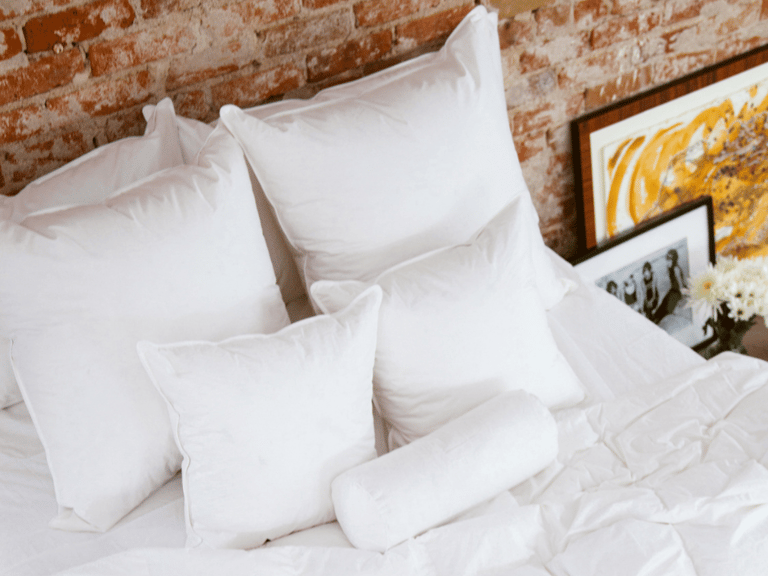
For a bed, scale affects the whole composition. Larger shams can provide a visual backdrop for smaller sleeping pillows; a lumbar cover can add a contrasting horizontal line. Before ordering several pieces, consider how their measurements relate to the mattress and headboard. A cover that looks generous in a close-up product photograph may have a different presence on a full, queen, or king bed.
Closures, seams, and the details that shape daily use
The closure is easy to miss in a product image, but it affects both appearance and maintenance. An envelope closure uses overlapping fabric at the back, keeping the insert concealed without a visible fastening. A zipper can offer a neat edge and help contain a plump insert, though its position and construction matter. Buttons or ties may provide a decorative detail while adding more steps when the cover needs laundering.
Look for the closure type in the written specifications. If it is not stated, examine the listing carefully or ask before buying. Check whether the closure is centered or offset, whether it may be visible from the front, and whether it will be comfortable if the pillow is used for lounging. A decorative sham with a broad border may have a different profile from a simple cover even when both are made from linen.
Seams and finishing also influence durability. Reinforced stitching can help a cover withstand regular handling, while delicate trims may call for gentler care. A washed linen cover may have a relaxed edge or natural variations that are part of its intended look. Read the description to understand which details are deliberate. If a fabric’s irregularities are described as natural, that is a useful expectation to have before the parcel arrives—not a reason to assume every variation is a defect.
Color, texture, and a bedroom’s visual rhythm
Linen often works best when it is allowed to be a material rather than a performance. Its surface already supplies visual interest, so a solid color can feel layered without adding another print. For a quieter scheme, choose pillow covers close in tone to the duvet or sheets, then let the weave and folds create contrast. For more definition, use a deeper shade or a contrasting natural tone against lighter bedding.
Texture can be mixed without making the bed feel busy. Linen next to smooth cotton brings a gentle difference in finish; a knitted or quilted layer adds another kind of surface. The useful principle is balance: combine fabrics with distinct but compatible qualities, and repeat a color or tone so the arrangement feels connected. A pair of matching shams can create symmetry, while a single lumbar pillow introduces an informal accent.
Color on a screen is only an approximation. Display settings, lighting, and photography can all affect how a shade appears. Natural fibers may also show subtle variation from piece to piece. If exact color coordination matters, compare the seller’s color descriptions carefully and review its return policy. When a room has changing daylight—common in homes with large windows or strong seasonal shifts—consider how a shade will look in both morning and evening light.
In a North Dakota bedroom, where winter layers and heated indoor air can shape comfort, covers are one element in a larger system. Linen can add a breathable surface, but no pillow cover can regulate an entire room on its own. Consider the cover alongside the pillow fill, sheets, duvet or comforter, heating habits, and the sleeper’s own temperature preferences. A beautiful textile is most successful when it also makes sense for the way the room is used.
Linen pillow cover care: a measured approach
Linen can soften with use and laundering, but the safest care instructions are the ones attached to the specific item. Fiber content, dye, finish, stitching, and trim may all affect how a cover should be washed. Follow the label or maker’s guidance rather than assuming every linen textile can be treated alike.
Before laundering, remove the insert and close zippers or fasteners if the care instructions advise it. Separate light and dark colors, and wash similar fabrics together to limit abrasion. A gentle cycle and a mild detergent are commonly sensible choices for washable linen, but the product label should determine the actual temperature and method. Avoid overcrowding the machine: fabric needs room to move, and friction can contribute to wear or creasing.
Drying deserves attention. High heat can be hard on fibers and may increase shrinkage, so check whether line drying or low-temperature tumble drying is recommended. Remove the cover while it is slightly damp if the care instructions permit, smooth it by hand, and reshape the corners before it dries fully. Linen’s natural creases are part of its character; ironing is optional, not a requirement. If a crisper finish is desired, use the care label’s heat guidance and press the fabric while slightly damp where appropriate.
- Read the care label before the first wash, especially for dyed, lined, or embellished covers.
- Wash the cover separately from rough items such as towels, which can create extra abrasion or lint.
- Use the recommended water temperature and drying method; do not infer care from fiber name alone.
- Reshape seams and corners while the fabric is damp, then allow it to dry as directed.
- Store the cover clean and fully dry, away from prolonged dampness.
If a cover is described as dry-clean only, has a special finish, or includes delicate trim, do not substitute a routine home wash. For a removable cover with a persistent stain, treat it according to the maker’s instructions and test any spot treatment discreetly when appropriate. Aggressive scrubbing can roughen the surface or alter the color. Care is less about making linen look untouched than helping it age evenly and remain usable.
What “softens over time” really means
Linen is often said to become softer with use. That can be true, but the process is gradual and depends on the fabric’s construction, finish, and laundering. A cover that feels firm on arrival may relax after repeated use; another may already have a washed, supple hand. Neither experience guarantees a particular timeline or a dramatic transformation.
Softening should not be confused with loss of structure. Some covers are intended to hold a defined shape, while others are meant to fall into loose folds. If you need a sham to remain crisp and architectural, pay close attention to its fabric weight, seam design, and care recommendations. If you prefer a relaxed look, natural creasing may be an advantage rather than a maintenance problem.
It is also worth setting realistic expectations around durability. Linen is a durable fiber, but a textile’s lifespan depends on yarn quality, weave, stitching, frequency of washing, and how it is used. Daily contact, pets, decorative hardware, and friction against a headboard can all affect wear. Rotating covers can spread use across a small collection and give each one time to air between changes.
A simple checklist before choosing
Online bedding descriptions can make a small purchase feel more complicated than it needs to be. A short checklist keeps the decision grounded in what will actually matter after the cover arrives.
- Product type: Is it a pillow cover, sham, or another decorative textile?
- What is included: Does the price cover the textile alone, or an insert as well?
- Measurements: Do the stated dimensions match the pillow and the intended fit?
- Material detail: Is the fabric composition clearly stated as linen, or a linen blend?
- Construction: What closure, seams, borders, or trims are specified?
- Care: Can the cover be laundered at home, and what drying method is recommended?
- Color and returns: Is the shade suitable for the room, and can an unsuitable item be returned?
The quieter pleasure of getting the details right
A pillow cover is not a complicated object, but it occupies a visible place in the room and a close one in daily life. Linen gives it a particular character: breathable, textured, and often at ease with a little imperfection. Its appeal is not that it remains immaculate. It is that its relaxed surface can make a bedroom feel more personal and less staged.
For Coyuchi pillow covers and shams, as for any linen bedding, the strongest choice is the one whose specifications match your needs. Check the dimensions rather than relying on a familiar size name. Confirm whether an insert is included. Look for the closure and read the care instructions before making assumptions about washing. Then consider the softer questions: whether the color belongs in your room, whether the texture suits your bedding, and whether the intended shape is tailored or loose.
When those practical decisions are settled, styling becomes simpler. A linen sham can frame the bed; a smaller cover can introduce a restrained accent; a well-chosen pair can bring order without making the room feel formal. Over time, the fabric may relax, the creases may become familiar, and the bed may look less like a display than a place to rest. That is the point of good bedroom textiles: not perfection, but comfort with a little character.